
Many homeowners in Ross County are paying more property tax than they legally owe simply because they never applied for available credits. Property tax relief programs are not automatically applied in every situation, and missing one filing deadline can cost hundreds of dollars over time. If your assessed value has increased or your tax bill feels higher than expected, reviewing available real estate tax reduction programs is essential. The Ross County Auditor administers several state-authorized exemptions that reduce taxable value or provide direct tax bill reductions. Understanding which programs apply to your situation can immediately lower your annual property tax liability.

Overview of Ross County Property Tax Credit Programs
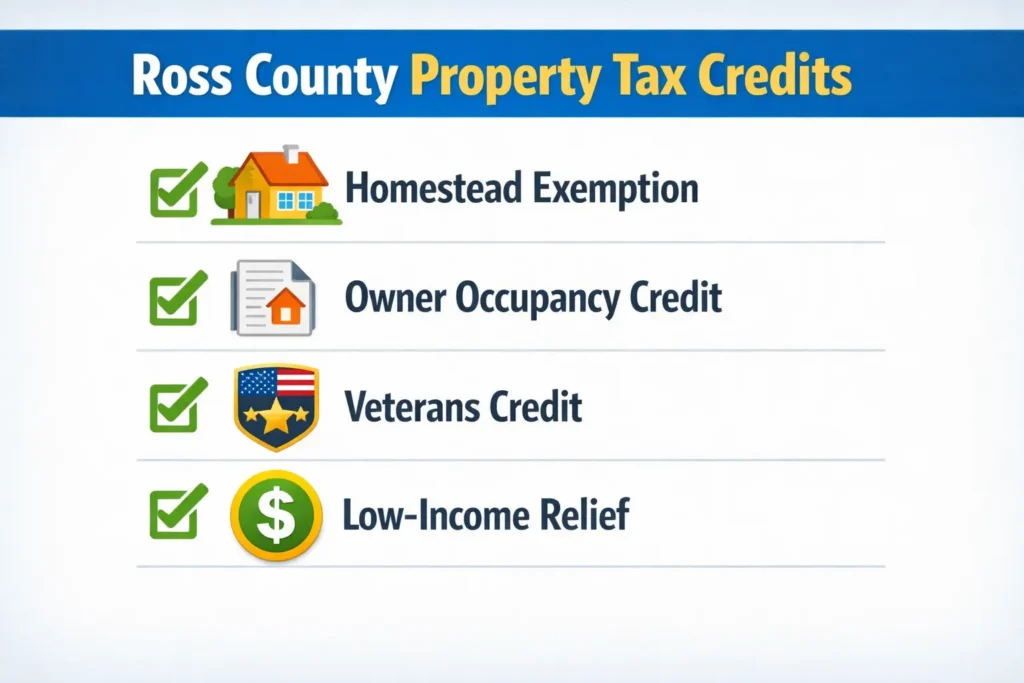
Ross County homeowners may qualify for multiple property tax relief programs depending on age, disability status, veteran classification, income level, and owner-occupancy status. These programs are authorized under Ohio law but administered locally through the Ross County Auditor’s Office in Chillicothe. Some credits reduce the taxable assessed value of your property, while others reduce the final tax bill after millage rates are applied. Eligibility requirements vary, and documentation is typically required at the time of application. The table below provides a structured summary of the most common tax credit programs available to owner-occupied property owners in Ross County.
| Program | Who Qualifies | Estimated Savings | Where to Apply |
|---|---|---|---|
| Owner Occupancy Credit | Primary residence homeowners | 2.5% tax bill reduction | Ross County Auditor |
| Homestead Exemption | 65+ or permanently disabled | Reduces taxable value (state-set amount) | Ross County Auditor |
| Disabled Veterans Exemption | 100% service-connected disability | Larger taxable value reduction | Ross County Auditor |
| Income-Based Relief | Low-income senior/disabled homeowners | Varies by income threshold | Ross County Auditor |
Owner Occupancy Credit (2.5% Tax Reduction)
The Owner Occupancy Credit provides a 2.5% reduction on the total property tax bill for homeowners who use the property as their primary residence as of January 1 of the tax year. This credit does not reduce market value or assessed value but lowers the tax liability after calculations are complete. For example, if your annual property tax bill is $3,200, a 2.5% rollback would reduce it by approximately $80. Only one property per owner may receive this credit, and rental or investment properties generally do not qualify. In most cases, a one-time application must be filed with the Ross County Auditor after establishing residency, and the credit typically continues as long as eligibility remains unchanged.
Ohio Homestead Exemption (Senior and Disability Relief)
The Ohio Homestead Exemption reduces the taxable assessed value of an owner-occupied property for qualifying seniors or permanently disabled homeowners. Applicants must generally be age 65 or older or meet state definitions of total and permanent disability, and income limits may apply depending on eligibility category. The exemption reduces the portion of assessed value subject to taxation, which lowers the final property tax calculation based on local millage rates. Savings vary depending on tax district and property value, but the reduction can be significant for eligible homeowners. Applications must be filed with the Ross County Auditor, and approval is subject to state guidelines under the Ohio Revised Code.
Disabled Veterans Homestead Exemption
Veterans with a qualifying 100% service-connected disability rating may be eligible for an enhanced homestead reduction that provides a larger decrease in taxable value than the standard senior exemption. Eligibility is determined based on documentation from the U.S. Department of Veterans Affairs, and surviving spouses may qualify under certain conditions. This exemption reduces assessed value before tax rates are applied, which may substantially decrease annual property taxes depending on local levy rates. Required documentation typically includes a disability rating letter and military discharge papers such as DD-214. Applications are processed locally through the Ross County Auditor’s Office in accordance with state-administered eligibility standards.
Income-Based Property Tax Relief
Certain homestead-related programs are income-based and designed to assist low-income seniors or permanently disabled homeowners who meet state income thresholds. Household income from the prior tax year is typically reviewed, and applicants may be required to provide a copy of their federal or Ohio income tax return as supporting documentation. Because income limits may change annually, verification may be required during renewal periods to confirm continuing eligibility. These programs reduce taxable value rather than market value and apply only to owner-occupied real estate. Filing before the annual deadline is important to ensure the reduction applies to the current tax year.
Where to Apply in Ross County
All property tax credit applications are handled by the Ross County Auditor’s Office located at 2 North Paint Street, Chillicothe, Ohio 45601, and assistance is typically available during standard weekday business hours. The office phone number is (740) 702-3080, and property tax forms are generally accessible through the official website at www.rosscountyauditor.org
. While eligibility rules are established by the State of Ohio, the county office processes applications, verifies documentation, and updates parcel records. Some forms may be downloaded online, but certain applications may require in-person verification depending on the exemption type. Contacting the office directly ensures you receive the most current filing instructions.
Documents You Will Likely Need
When applying for a tax credit or exemption, complete documentation is required to prevent delays or denial of the application.
- Proof of age such as a driver’s license or birth certificate
- Proof of disability status if applicable
- Prior-year income documentation or tax return copy
- Proof of property ownership such as deed record
- Proof of residency for owner-occupied status
- Veteran discharge papers and disability rating letter if applying under veteran exemption
Incomplete submissions may delay processing and affect the tax year in which the reduction is applied.
Filing Deadlines and Renewal Requirements
In most cases, homestead-related applications must be filed by the first Monday in June of the applicable tax year, although specific deadlines should always be confirmed with the Auditor’s Office. Missing the filing deadline may delay the credit until the following tax year, which could result in a full year without tax reduction. Some credits, such as the Owner Occupancy Credit, require prompt application after moving into the property. While many exemptions renew automatically if eligibility continues, income-based programs may require periodic verification. Homeowners should review any tax adjustment notice or annual reassessment documentation to confirm continued eligibility.
How to Verify If You Are Already Receiving a Credit
You can confirm whether a property tax credit has been applied by reviewing your property tax statement or using the Ross County Auditor’s parcel lookup tool available online. On the property tax bill, look for line items referencing Owner Occupancy Credit, Homestead Reduction, or similar assessed value adjustments. Through the auditor property search tool, you can enter your parcel number or address to review exemption status listed on the property record card. If no reduction appears and you believe you qualify, contacting the Auditor’s Office for clarification is recommended. Regular review of your property tax statement ensures you are not missing available real estate tax relief.
Common Mistakes to Avoid
Many homeowners lose potential savings because of preventable errors during the application or renewal process.
- Assuming credits apply automatically
- Missing the annual filing deadline
- Failing to update residency status
- Not reporting income changes when required
- Attempting to apply credits to rental properties
Avoiding these issues helps ensure uninterrupted property tax reduction and continued eligibility..
Conclusion
Property tax credits exist to reduce your legal tax burden, but they must be properly applied and verified. Reviewing your parcel record, confirming assessed value reductions, and applying before the filing deadline can prevent unnecessary tax payments. If you are age 65 or older, permanently disabled, a qualifying veteran, or a primary residence homeowner, you may qualify for meaningful property tax relief. Contact the Ross County Auditor’s Office in Chillicothe to confirm eligibility and ensure every available credit is reflected on your next property tax statement.
FAQs
1. Can I receive both the Owner Occupancy Credit and Homestead Exemption?
Yes, in most cases eligible homeowners may receive both since one reduces the tax bill directly and the other reduces taxable value.
2. Does the Homestead Exemption lower my home’s market value?
No, it reduces taxable assessed value only and does not affect resale value.
3. Is the Owner Occupancy Credit automatic when I buy a home?
Typically, an application must be filed after establishing the property as your primary residence.
4. What happens if I move to another home in Ross County?
Credits do not automatically transfer and you must reapply for the new primary residence.
5. Do I need to reapply every year?
Most programs continue automatically if eligibility remains unchanged, but income-based exemptions may require periodic verification.
6. Who sets the eligibility rules?
The State of Ohio establishes program rules, while the Ross County Auditor administers applications locally.