
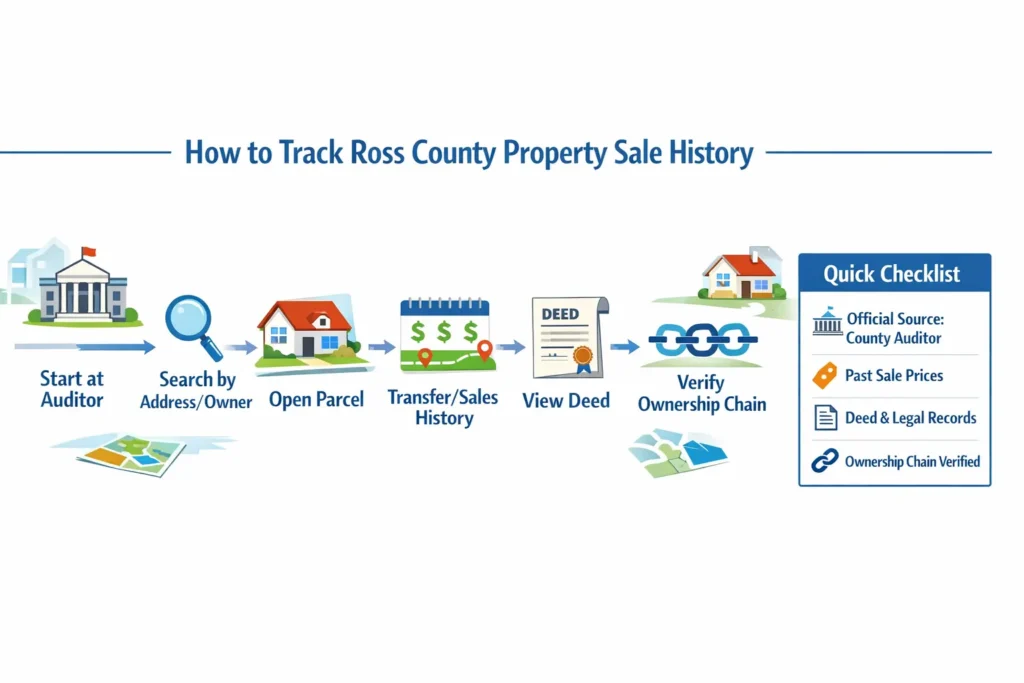
Trying to research a property in Ross County and check its property sale history can feel like wandering through a maze built by bureaucrats. You just want to know who owned it before, what it sold for, and when, but every website looks hostile and confusing. Whether you’re buying, selling, inheriting or disputing a property, guessing is dangerous. This guide exists to give you a clean, simple path. It shows exactly where to start, what to click, how to find real sale prices, and how to get official records you can trust. No rabbit holes. No wasted hours. Just answers. With the right approach you can save time, reduce stress and make confident property decisions without relying on guesses or third-party estimates.
I Don’t Know Where to Even Start.
Most people waste time on random websites because they don’t know which Ross County tools are official. Your starting point should always be the Ross County Auditor Property Search and the Ross County Recorder’s Office. These are government-run databases that hold Ohio property records, ownership details, and transaction history. They are the same sources banks, attorneys, and title companies rely on. Starting here means you’re using the county property database, not scraped or outdated third-party data. Once you understand these sources, you’ll realize that accurate property research is faster and more reliable than relying on guesswork or informal websites.
Every Site Looks Confusing.
County portals aren’t built for comfort, but they are usable once you know the flow. Begin at the Auditor’s property search page, enter an address or owner name, and open the parcel record. You’ll see land details, owner information, and links to related records. From there, jump to the Recorder’s site for deed images and transfers. This step-by-step property search removes the fear and turns a hostile interface into a predictable system. Learning this workflow once can save countless hours in the future, especially when researching multiple properties or cross-checking ownership details.
I Just Want Past Sale Prices.
Inside the parcel record, scroll to the “Transfer History” or “Sales” section. This area lists previous transactions, including dates and sale amounts. Click the associated document number to open the deed in the Recorder’s system. That’s where you see real property sale history, not estimates. These are the same real estate transaction records used in legal filings, appraisals, and tax assessments. Understanding past prices also helps spot trends, such as how the market reacts after renovations or transfers within families, giving you a complete picture before making decisions.
Is This Data Even Accurate?
Yes. These are official county records created when a deed is recorded with the government. They are verified property data tied to legal ownership changes. Unlike real estate websites that rely on MLS feeds or user input, county records are the authoritative source. When you view public deed information from the Auditor or Recorder, you’re seeing what courts, lenders, and tax authorities rely on. Using these verified records protects you from inaccurate information that could cost time, money, or even legal trouble later on.
I’m Buying and Don’t Want to Overpay.
Sale history is one of the strongest tools for home value research. By reviewing what a property sold for in the past and comparing it with nearby parcels, you can judge whether the asking price is realistic. This turns guesswork into due diligence. Even a single past transaction can reveal patterns in appreciation, renovation timing, or market shifts, helping you avoid emotional overbidding. Combining historical data with current listings allows you to make informed offers and negotiate confidently with sellers.
I Don’t Know the Owner’s Name.
You don’t need it. Both the Auditor and Recorder systems allow search by address. Enter the street address, and the system returns the parcel number, current owner, and full record. From there, you can trace ownership and sales backward. Address-based search is how most professionals begin, especially when researching unfamiliar properties. This approach is also essential for legal purposes, tax verification or resolving disputes when ownership names are unknown or unclear.
I Need This for Legal or Tax Reasons.
County records aren’t just informational. They are legally usable. Deed history, ownership chains, and tax assessment records are accepted in courts, estates, and audits. If you’re dealing with inheritance, boundary disputes, or title clarification, these records provide documented proof. Title history from the Recorder’s Office is the foundation of property law. Maintaining organized records from these official sources can prevent problems in legal proceedings or property tax issues down the line.
Why Is This Different From Zillow?
Zillow and similar platforms show listings and estimates. They rely on MLS data and algorithms. County records show what actually happened. They include off-market sales, family transfers, foreclosures, and non-MLS transactions. When Zillow says “sold,” it’s reporting. When the county says “sold” it’s recording a legal event. For serious decisions, county data always wins. Relying solely on real estate websites can leave gaps or errors that affect investment choices and property valuations.
What If I Get Stuck?
You’re not alone. The Ross County Auditor and Recorder offices both offer human help. You can call, email, or visit in person to request assistance. Staff can guide you to the right record or explain what a document means. When online tools fail, in-person record requests still exist. There is always a path forward. Knowing who to contact ahead of time can save frustration and help you get accurate information quickly, even for complex or older properties.
I Don’t Want to Waste Hours.
The fastest method is simple: search the address in the Ross County Auditor database, open the parcel, scroll to transfer history, then click through to the Recorder’s deed. In under five minutes, you can see ownership and past sale prices. This efficient record search replaces endless clicking with a repeatable system that works every time. Establishing this routine ensures you can research multiple properties efficiently which is critical for investors, lawyers, and anyone performing due diligence.
Quick Property Research Checklist
- Start at the Ross County Auditor Property Search
- Search by address or owner name
- Open the parcel record
- Scroll to transfer or sales history
- Note dates and sale amounts
- Click document numbers
- Open deeds in Recorder system
- Verify ownership chain
- Save or print records
- Contact county offices if stuck
Where Each Type of Information Lives
| What You Need | Where to Find It | What It Shows |
|---|---|---|
| Current owner | Ross County Auditor | Legal owner name |
| Parcel number | Ross County Auditor | Lot size, zoning, taxes |
| Property size and details | Ross County Auditor | Land, improvements, taxes |
| Past sale prices | Auditor → Transfer History | Recorded sale amounts |
| Deed images | Ross County Recorder | Legal transfer documents |
| Ownership chain | Recorder’s deed records | Past owners and sequence |
| Legal proof of transfer | Recorded deeds | Court-accepted evidence |
| Tax assessment history | Auditor’s tax records | Tax values and assessment history |
Conclusion
Tracking property sale history in Ross County doesn’t require luck or insider knowledge. It requires starting in the right place. The Auditor tells you what exists. The Recorder proves what happened. Together, they give you everything you need to research a property with confidence. Once you understand the flow, you stop guessing and start knowing. That’s the difference between browsing and real due diligence. Keeping organized records of your searches also ensures you can revisit information anytime for tax, legal, or investment purposes, giving peace of mind along the way.
FAQs
1. Can I search Ross County property records for free?
Yes. Both the Auditor and Recorder databases are public and free to use. You don’t need to pay unless requesting certified copies, making it accessible for anyone doing research.
2. Do I need the owner’s name to search?
No. You can search using only the street address. This makes it easy to research properties when owner names are unknown or outdated
3. Why don’t Zillow prices match county records?
Zillow uses estimates and MLS data. County records show legal sale amounts. Always rely on official documents for financial or legal decisions.
4. How far back does sale history go?
Many records go back decades, depending on digitization. Older transactions might require in-person requests for complete documents
5. Are these records valid for legal use?
Yes. Deeds and transfers are official government records. They are recognized in courts, tax assessments, and title verification processes.
6. Who do I contact if I can’t find a record?
The Ross County Auditor or Recorder’s Office can guide you. Staff can explain processes, help locate hard-to-find parcels, and provide certified copies if needed.