
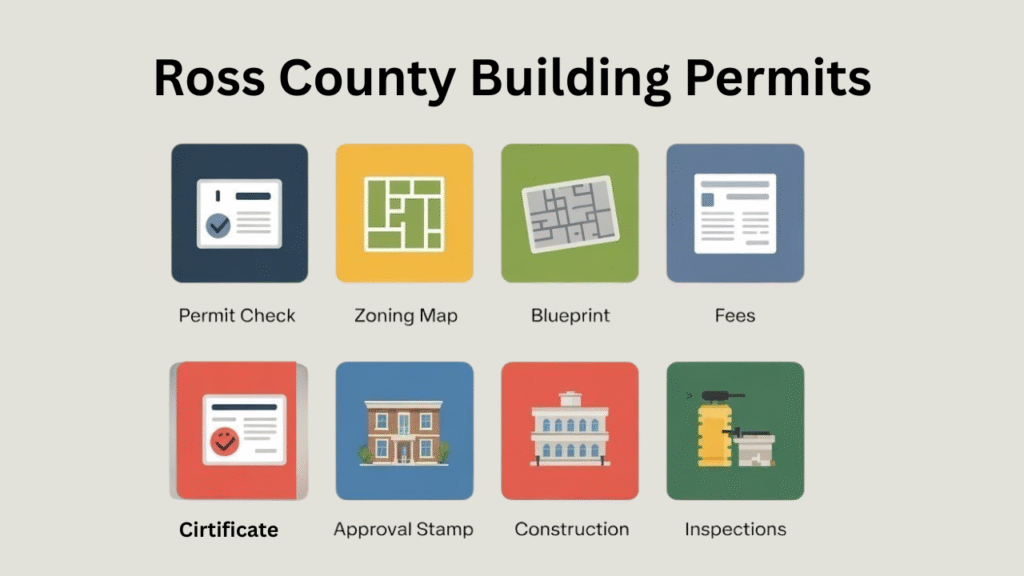
Before you swing a hammer or even daydream about breaking ground in Ross County, Ohio, you need a clear understanding of how the county’s building permit system works. Ross County treats building safety and zoning compliance seriously, so whether you’re putting up a small storage shed, expanding your home, remodeling a kitchen or planning a full-scale commercial build, the right permits aren’t optional. They protect you legally, ensure your project follows Ohio’s construction standards, and prevent expensive corrections later.
Securing a building permit in Ross County involves more than filling out a form. You’ll need to confirm zoning rules for your specific parcel, verify that your planned structure meets state-adopted building codes, prepare drawings or site plans, and submit the required documentation to the Ross County Building Department. This step-by-step approach helps you avoid delays, keeps your project compliant, and makes the entire approval process smoother.
This guide explains each stage in detail from initial zoning checks to final submission so you can move through the Ross County building permit process with clarity, accuracy, and confidence.
The Importance of Building Permits in Ross County
Building permits in Ross County aren’t just some annoying paperwork ritual. They’re formal approvals issued by the county to confirm that your construction plans meet the safety rules, structural standards, and state codes that every property owner is expected to follow. When a permit is issued, it’s basically the county saying your project won’t fall over, catch fire, or become a neighborhood hazard later.
Ross County relies on permits to keep construction quality consistent, protect public safety, and maintain accurate records of structural changes on every parcel. Whether you own a single-family home or manage a commercial property, these approvals help ensure that anything added, altered, or repaired on your land is built responsibly and inspected by qualified professionals.
Why Permits Matter in Ross County
• Verifies compliance with the Ohio Building Code (OBC).
Every structural, electrical, plumbing, and mechanical element must meet statewide standards. A permit confirms that your project is being built to code from day one.
• Prevents expensive enforcement actions.
Skipping a permit can lead to stop-work orders, fines, forced demolition of unapproved work, or legal complications if the county decides your project violates safety rules.
• Protects your long-term property value.
Unpermitted construction can derail a future sale or refinancing. Lenders and buyers often require documented proof that all improvements were legally approved and properly inspected.
• Ensures professional inspections throughout construction.
Ross County inspectors review each stage of your project, reducing the risk of structural failures, code violations, or hidden safety issues.
Even relatively small additions like storage sheds, fencing, interior remodels, or minor structural changes may require a permit in Ross County depending on dimensions, placement, and intended use. When in doubt, it’s always smarter to verify requirements with the county than to discover later that your “small project” triggered major compliance issues
Step 1: Confirm Whether Your Project Requires a Permit
Not every improvement in Ross County triggers a permit, but plenty of them do. Before you buy materials or start planning weekend construction heroics, you need to verify whether your specific project falls under the county’s permit requirements. Ross County follows state building codes and its own local regulations, so guessing is a great way to end up with a stop-work order taped to your front door.
Projects That Typically Require a Permit in Ross County
• New residential or commercial buildings
Any new structure, whether it’s a family home, a business facility, or an agricultural building with habitable space, must be reviewed and approved before construction begins.
• Additions, decks, porches, garages, and expansions
Anything that increases the footprint or structural load of your existing building requires formal approval.
• Electrical, plumbing, and HVAC installation or upgrades
If it involves wiring, pipes, gas lines, ventilation, or system replacements, the county will want permits and inspections.
• Major remodels or structural modifications
Wall removals, beam changes, foundation work, and major interior renovations cannot be done without proper authorization.
• In-ground or above-ground swimming pools, accessory structures, and larger sheds
Placement, fencing, electrical hookups, and structural safety standards must all meet county requirements.
Projects That Sometimes Do Not Require a Permit
(Still confirm first, because Ross County doesn’t appreciate surprises)
• Very small storage sheds below a specified square footage
• Cosmetic work like interior painting or refinishing
• Basic repair tasks that do not alter structural or mechanical systems
• Routine property maintenance with no electrical, plumbing, or structural impact
If you’re unsure, checking with the county before starting saves you from the bureaucratic headache later. Even “simple” projects can turn into compliance nightmares if they violate zoning or code rules.
Ross County Contact Information
Ross County Building Department
Address: 15 North Paint Street, Chillicothe, OH 45601
Phone: 740-773-7200
Fax: 740-774-4754
Ross County Planning & Building Safety Office
Phone: 740-702-3005
Office Hours
• Public Hours: Monday to Friday, 8:00 AM to 4:00 PM
• Processing & Internal Review: Typically 4:00 PM to closing (phones may be limited)
• After-Hours Submissions: A secure drop box is available at the main entrance for applications, forms, and supporting documents.
Step 2: Review Zoning Requirements
Before you rush into the permit application stage, you need to make sure your project fits within Ross County’s zoning rules. Zoning dictates what type of structure you’re allowed to build, how large it can be and where it can sit on your property. If you skip this step, you’re basically begging the county to slow your project down later.
How to Check Zoning in Ross County
• Use the Ross County Auditor’s GIS portal and search by address or parcel number to view your zoning classification.
• Review the basic rules tied to that zoning category, including permitted uses and general restrictions.
• Contact your township zoning inspector to confirm setback rules, placement limits, and any local requirements that apply to your project.
If anything in your plan conflicts with zoning regulations, you’ll need a variance or other zoning approval before moving forward with the building permit stage.
Step 3: Prepare Your Application and Plans
After confirming that your project meets Ross County zoning requirements, the next step is gathering the documents the Building Department expects before they’ll even look at your permit request. The county won’t approve anything without a complete, accurate packet, so getting this part right matters.
What You Need for a Ross County Building Permit Application
• A fully completed building permit application form
Every section must be filled out, including project details, property information, and contractor data.
• Construction plans or detailed blueprints
These should clearly show dimensions, materials, and structural elements. Ross County wants enough detail to understand exactly what you’re building.
• A site plan
Include property lines, easements, existing structures, and the proposed location of the new work. Setbacks must be shown clearly.
• Contractor information
If you’re using a contractor, you’ll need proof of licensure and current insurance. Ross County is strict about this.
• Project cost estimate
This helps determine permit fees and ensures the scope is accurately represented.
For larger or more technical projects like new homes, major additions, or commercial construction, your drawings may need to be sealed by a licensed Ohio architect or engineer. Stamped plans confirm that the design meets state building standards and carries professional accountability.
Having all of this ready before you apply keeps your project from landing in the dreaded “pending additional information” pile.
Step 4: Submit Your Application
Once your paperwork is assembled and your plans are in order, it’s time to hand everything over to the people who decide your project’s fate: the Ross County Building Department or, in some areas, the local municipal building office. Ross County has a mix of unincorporated territory and municipalities, so where you submit depends entirely on where your property sits. If you send it to the wrong office, expect a very polite delay.
Ways to Submit Your Application
• In person
You can bring your full application packet directly to the Ross County Building Department. This is usually the fastest option, especially if questions come up during intake.
Ross County Building Department
15 N Paint Street
Chillicothe, OH 45601
Phone: 740-773-7200
• By mail
If you prefer the old-fashioned route, you can mail the complete set of documents along with any required fees. Make sure everything is signed, complete, and legible, because missing information will delay processing.
• Online (varies by municipality)
Some cities within Ross County offer digital submission portals or allow applicants to email plans. Availability depends on the specific municipality, so don’t assume your township is running a high-tech operation.
Common Submission Locations in Ross County
Where you submit your application depends on which jurisdiction governs your parcel:
• Ross County Building Department
Handles most unincorporated areas and township jurisdictions.
• City of Chillicothe Building Department
Properties within city limits follow Chillicothe’s own building and zoning procedures.
• Other municipalities and townships
Some townships may require zoning approval first or maintain their own submission process, depending on local regulations.
Before you file anything, confirm which office has authority over your property. Submitting to the wrong department only slows the entire process, and Ross County is not known for magically forwarding your paperwork to the right place.
Step 5: Pay the Required Fees
After submitting your application, the Ross County Building Department will calculate the fees based on your project’s scope. The county ties its fee structure to project size, complexity, construction cost, and the specific trades involved. Larger builds, structural work, and anything requiring multiple inspections naturally cost more.
Typical Fees You May Need to Pay in Ross County
• Building permit fee
Covers the review and approval of structural plans and the administrative processing of your permit.
• Trade-specific permit fees
Electrical, plumbing, HVAC, and gas line work each require their own permits, and each comes with separate charges.
• Plan review fees
Applied when the county must evaluate detailed blueprints, load calculations, structural components, or stamped architectural plans.
• Inspection fees
These cover required inspections at various stages of construction, such as footing, framing, electrical rough-in, plumbing rough-in, and final approval.
Ross County updates its fee schedule periodically, and amounts differ between residential, commercial, and specialized projects. Always check the current fee list or call the Building Department before paying so you don’t end up submitting the wrong amount and delaying your application.
Step 6: Await Plan Review and Approval
Once your building permit application has been submitted to the Ross County Building Department or the relevant municipal office, it enters the formal review process. This step is essential to ensure that your construction or renovation project complies fully with Ross County building codes, zoning regulations, and safety standards.
What the Review Examines:
- Structural Integrity: Ensures that foundations, framing, and load-bearing elements meet code requirements and are safe for long-term use.
- Fire Safety: Confirms that fire-resistant materials, alarms, exits, and suppression systems are correctly planned.
- Electrical, Plumbing, and HVAC Systems: All installations must adhere to Ohio’s state codes and Ross County ordinances to prevent hazards and ensure efficiency.
- Accessibility and Energy Compliance: Plans are checked for compliance with accessibility standards and local energy efficiency requirements, including insulation, ventilation, and sustainable building practices.
Typical Timeline:
- Minor residential projects, such as small room additions or decks, may receive approval within a few business days.
- Larger or commercial projects, including multi-family units or new business facilities, may take several weeks, depending on the complexity of the plans and workload of the building department.
If Corrections Are Needed:
If any discrepancies, omissions, or code violations are identified, the Ross County Building Department will notify you. You will need to revise your plans according to the feedback and resubmit them for further review. Promptly addressing these corrections can significantly reduce overall project delays.
Step 7: Obtain Your Ross County Building Permit and Start Construction
Once your building permit is approved and all fees are paid, the Ross County Building Department will issue your official permit. Display it prominently at the job site, as inspectors will check it during visits.
Important Points:
- Start Timeline: Construction should begin within six months of permit issuance. Delays may require a new application.
- Permit Expiration: Extended work stoppages can lead to permit expiration. Notify the department if delays occur.
- Inspections: Schedule inspections at key stages, such as:
- Foundation – to confirm structural integrity.
- Framing – for load-bearing structures.
- Electrical, Plumbing, HVAC – to meet Ohio codes.
- Final Inspection – to ensure compliance with approved plans and safety standards.
Following these steps ensures your project is safe, legal, and maintains property value.
Step 8: Schedule Construction Inspections in Ross County
During your project, Ross County building inspectors play a crucial role in confirming that all work adheres to approved plans, local building codes, and safety standards. It is the property owner’s responsibility or the contractor’s, if applicable to schedule inspections with the Ross County Building Department at key construction milestones.
Typical Inspection Stages:
- Foundation: Verifies footings, slab, and structural supports meet safety and code requirements.
- Framing: Ensures walls, beams, and load-bearing elements are correctly installed.
- Electrical, Plumbing, and HVAC: Confirms systems comply with Ohio state codes and county regulations.
- Final Inspection: Conducted before occupancy to ensure the entire project is completed according to approved plans and safety standards.
Successfully passing these inspections keeps your project on schedule, prevents potential fines or delays, and ensures a safe, code-compliant building.
Step 9: Obtain Final Approval and Certificate of Occupancy
Once all required inspections are successfully completed, the Ross County Building Department will issue a Certificate of Occupancy (CO) or final approval. This document officially confirms that your construction project complies with all applicable Ross County building codes, zoning regulations, and safety standards, and is legally safe for occupancy or use.
Why the CO Is Essential:
- Legal Occupancy: You cannot legally inhabit or use the structure without a CO.
- Financing and Sales: Lenders, buyers, or insurance providers may delay loans, closings, or coverage until final approval is issued.
- Record Keeping: Maintain copies of your building permit and Certificate of Occupancy for future reference, renovations, or property transfers.
Obtaining the CO completes your project, giving you confidence that your building is fully compliant, safe, and ready for its intended use.
Conclusion: Navigating Building Permits in Ross County
Obtaining a building permit in Ross County may appear complex at first, but understanding the process step by step makes it manageable and straightforward. By carefully reviewing local zoning regulations, preparing thorough and accurate construction plans and coordinating closely with the Ross County Building Department or your municipal office, you can ensure a smooth approval process and a safe, code-compliant project.
Before breaking ground, take the time to confirm your property’s zoning classification and communicate with your township or municipal office. Doing so helps prevent unexpected delays, fines, or costly corrections. With careful planning, adherence to permit requirements, and timely scheduling of inspections, your construction or renovation project can proceed confidently, safely, and fully in compliance with all Ross County building codes and regulations.
FAQs
Do I need a permit to build a shed or deck?
Yes, most sheds and decks require a permit if they exceed size or height limits.
Do I need inspections during construction?
Yes, inspections are required at key stages like foundation, framing, and final approval.
Can I apply for a permit myself, or do I need a contractor?
Homeowners can apply for single-family projects; licensed contractors are required for other work.
What happens if I build without a permit?
You may face fines, stop-work orders, or required demolition.
Where can I get permit forms?
Forms are available online or at your township or Ross County Building Department.